


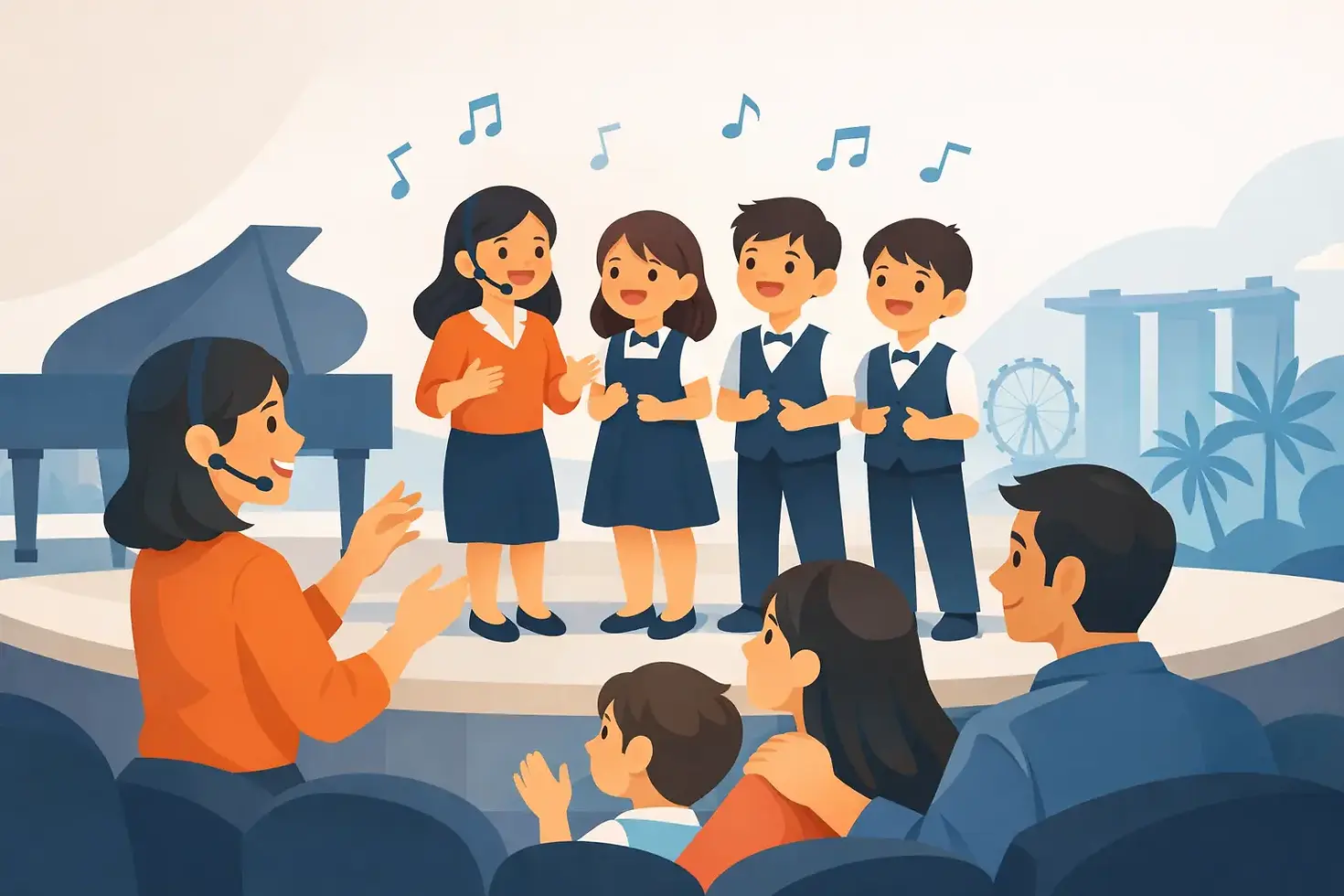
Show Choir Classes Singapore Parents Trust

A child who loves to sing is easy to spot. A child who can sing, move with control, stay in sync with a group, and perform with confidence - that takes training. That is why parents searching for show choir classes Singapore options are often looking for more than a fun activity. They want a class that builds real skills, keeps students engaged, and gives them a clear path to improve.
Show choir sits in a very specific space within performing arts training. It is not just singing. It is not just dance. It is not the same as a casual musical theater club either. The best programs bring vocals, movement, musicality, stage awareness, and ensemble discipline into one structured class. For students who love to perform, that combination can be incredibly motivating.
What makes show choir training different
A strong show choir class asks students to do several things well at the same time. They need to sing accurately, keep rhythm, learn choreography, project energy, and stay connected to the group. That challenge is part of the appeal. Students are not only developing technique - they are learning how to perform under pressure while still working as part of an ensemble.
For younger children, this often translates into better coordination, listening skills, and confidence. For older students and teens, the benefits can become even more obvious. They learn how to manage breath while moving, how to maintain performance quality through repetition, and how to present themselves with polish on stage.
This is also why class quality matters. A weak program can feel messy very quickly. If vocal instruction is neglected, students may develop poor habits. If the dance component is too advanced too soon, confidence can drop. If everything is treated as pure entertainment, students may enjoy the class but plateau fast. The right balance is disciplined, encouraging, and performance-centered.
What to look for in show choir classes Singapore families are considering
Not every program labeled as performance training delivers the same outcome. Parents and students should look closely at how the class is built.
The first question is whether the program genuinely integrates singing and dance. Some classes lean heavily toward choreography and treat vocals as an afterthought. Others focus so much on singing that movement becomes minimal. True show choir training should develop both together, because that is the skill students need when they perform.
The second is structure. Age-based and level-based progression matters. A six-year-old beginner needs a very different teaching approach from a teen preparing for auditions or showcases. When classes are grouped appropriately, students can build technique at the right pace instead of feeling either overwhelmed or under-challenged.
Instructor quality matters just as much. Students benefit most when teachers understand both performance standards and how to coach young people. Great training is not about pushing students to copy a routine. It is about helping them improve posture, timing, vocal placement, expression, and confidence in a way they can sustain.
Curriculum is another strong indicator. Programs with a defined syllabus or training framework usually produce more consistent growth than classes built around week-to-week improvisation. That does not mean every lesson should feel rigid. It means there is a clear developmental plan behind the fun.
Why the best students train across disciplines
Show choir works best when it is part of broader performance development. A student who only attends one mixed class each week may still enjoy the experience, but progress is often faster when training is supported by focused work in vocals or dance.
That is one of the practical advantages of learning in an academy environment that offers multiple disciplines under one roof. Students can strengthen the exact areas that affect performance most. If a child has strong stage energy but weaker singing technique, vocal training can help. If another student sings confidently but struggles to move cleanly, dance classes can raise their performance level quickly.
This kind of cross-training becomes especially useful as students get older and their goals become more specific. Some want to perform more confidently at school events. Some want stronger preparation for musical theater and stage work. Some simply want a class that feels exciting and challenging rather than repetitive. Show choir can serve all of these goals, but the pathway should match the student.
A good class should feel exciting and demanding
Parents sometimes worry that a more structured performing arts class will feel too serious. In reality, the best show choir environments manage both energy and discipline well. Students should leave class energized, but they should also be learning how to rehearse properly, take direction, and improve over time.
That balance is especially important for children and teens. Too much pressure can take the joy out of performance. Too little structure can make the class feel disposable. A well-run program keeps standards high while creating an encouraging atmosphere where students are comfortable trying, adjusting, and performing again.
When that happens, confidence grows for the right reasons. It is not just confidence from praise. It is confidence built on skill, repetition, and visible progress.
Who benefits most from show choir classes
Show choir is a strong fit for students who naturally gravitate toward music and movement, but it is not only for outgoing personalities. Some quieter students do especially well because ensemble performance gives them a supported way to come out of their shell.
For preschool and early primary ages, classes with singing and movement can support musical awareness, coordination, and expressive confidence. For older children, the appeal often shifts toward performance quality and group choreography. For teens, show choir can become a serious training tool that supports stage presence, versatility, and performance stamina.
It is worth being honest, though - not every student wants the same thing. Some children love performing but dislike detailed correction. Others thrive on technical coaching. Some are ready for a progressive training pathway, while others simply want one high-quality class each week. The right program should meet students where they are while still giving them room to grow.
The value of an internationally informed curriculum
In a category as specialized as show choir, curriculum quality can make a real difference. A signature program developed from established performance practices tends to offer more than a generic sing-and-dance class. It brings consistency, stronger teaching methods, and clearer expectations for student development.
That matters to families who are not just choosing an activity to fill time. They are investing in training. A credible academy with recognized standards across vocal and dance instruction offers added reassurance because students are building skills that connect to broader performance education, not just memorizing one routine after another.
This is where a specialized academy can stand out. MADDspace, for example, positions show choir within a larger performance training ecosystem. That means students are not learning in isolation. They are developing within a structured environment shaped by vocal, dance, and stage training, with the added strength of a Signature Sing & Dance Show Choir curriculum sourced from Los Angeles. For families who want both excitement and credibility, that combination is compelling.
How to choose the right class for your child or teen
Start with your child’s current stage, not just their enthusiasm. A student who loves pop music videos may be excited by performance-based training, but they still need age-appropriate instruction. A younger beginner will usually do better in a class that builds musicality and movement step by step. An older student with prior dance or vocal experience may be ready for a faster pace and more performance polish.
It also helps to watch how the academy talks about progress. Do they describe a pathway, levels, or development goals? Can they explain how students grow from beginner participation into stronger performance ability? Those details often reveal whether the class is designed for long-term growth or short-term entertainment.
A trial class is often the best next step. Students can feel the teaching style for themselves, and parents can assess whether the environment is organized, encouraging, and appropriately challenging. The goal is not to find the flashiest room or the loudest energy. It is to find a place where training is intentional and students are expected to improve.
Show choir is one of the most exciting ways to train a young performer because it asks them to bring everything together at once - voice, movement, focus, expression, and teamwork. When the class is built well, students do not just learn routines. They learn how to carry themselves like performers, and that stays with them long after the music stops.


Comments