


A Musical Theatre Training Pathway That Builds Performers

A child who sings confidently in the car may freeze when asked to perform in front of a room. A teen with strong dance ability may struggle to tell a story through a song. That is why a musical theatre training pathway should be more than a collection of classes. It should give young performers a clear, encouraging progression from first creative steps to confident stage work.
For parents, the goal is not to rush a child into the spotlight. It is to find training that develops real skills while keeping the joy of performing alive. For students with bigger ambitions, the right pathway creates the discipline, versatility, and performance experience needed to keep growing.
What Makes a Musical Theatre Training Pathway Work?
Musical theatre asks students to connect three demanding disciplines: singing, dancing, and acting. Each one has its own technical foundations, but onstage they must work together. A performer cannot simply sing the notes, execute the choreography, and memorize the lines separately. They need to communicate character, emotion, and story while moving with control.
A structured pathway recognizes that development takes time. Early training should build musicality, coordination, imagination, and comfort in a group setting. As students mature, they can take on more focused vocal technique, choreography, scene work, ensemble awareness, and performance responsibility.
The best progression is age-appropriate without being limiting. A younger student may begin by learning to follow rhythm, use expression, and share space with others. An older beginner may need the same foundations, but delivered at a faster pace with more technical challenge. The starting point matters less than having a next step that feels achievable.
Start With Joy, Rhythm, and Creative Confidence
For preschool-aged children, musical theatre training should feel active, playful, and purposeful. Sing-and-dance classes can introduce listening skills, beat recognition, simple movement patterns, and imaginative storytelling through songs and games.
At this stage, confidence is built in small moments: joining a group activity, remembering a movement sequence, singing a line with clear words, or performing for classmates. These experiences help children become comfortable being seen and heard without placing adult expectations on them too soon.
Parents should look for classes that balance structure with encouragement. A program that is only free play may not create steady skill development, while an overly rigid class can make young children reluctant to participate. Good early-years instruction uses repetition, clear routines, and positive performance opportunities so students feel secure enough to try.
Build Technique Before Chasing Big Roles
As children enter junior and teen programs, training can become more intentional. This is where voice, dance, and drama need regular attention rather than occasional exposure. Students begin learning how posture affects breath support, how rhythm supports choreography, and how acting choices change the meaning of a lyric.
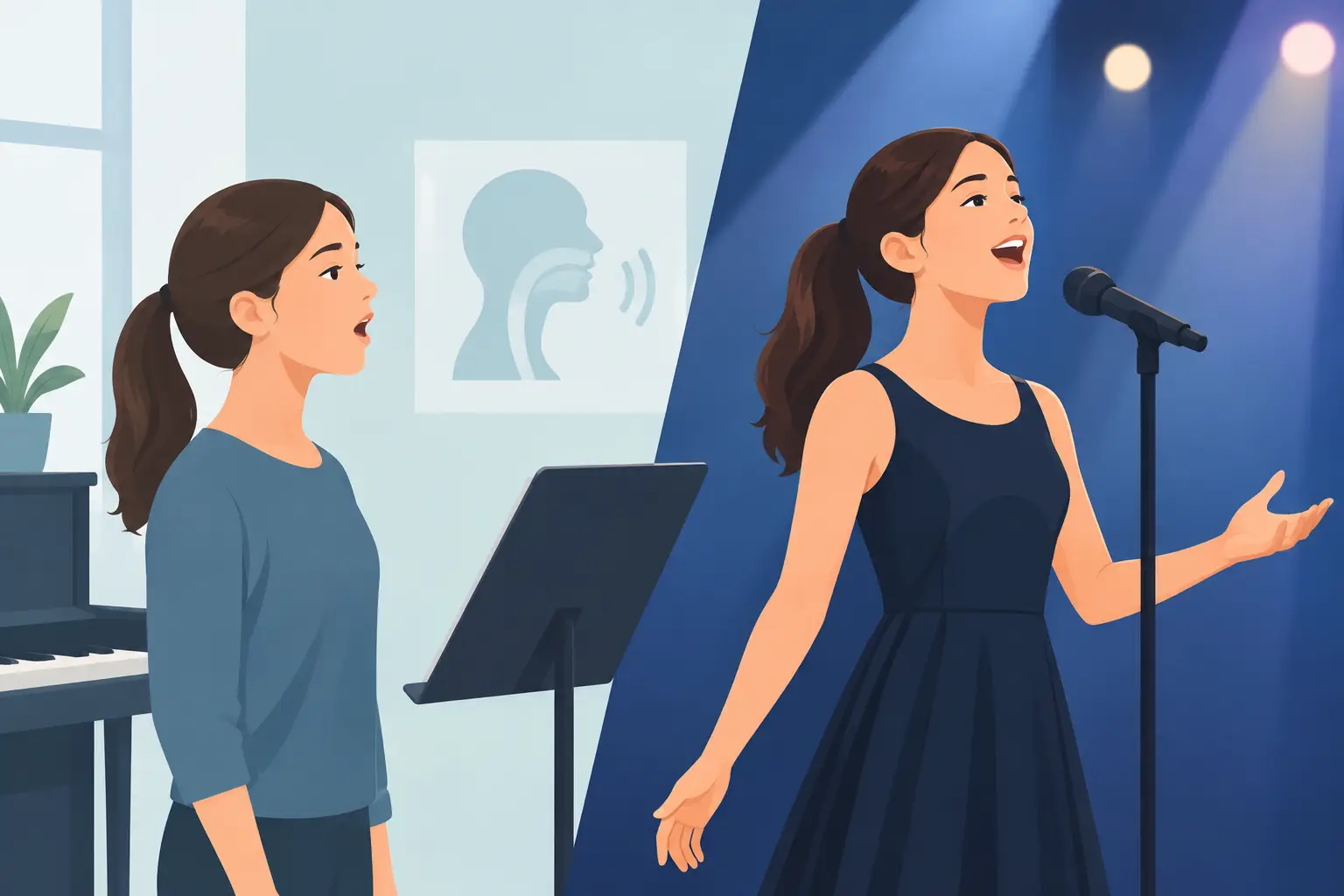
Vocal training is especially valuable because young voices are still developing. Rather than pushing volume or demanding an adult sound, students should learn healthy habits: breathing efficiently, speaking and singing with clarity, finding appropriate placement, and using expression without strain. Recognized frameworks such as London College of Music musical theatre and vocal syllabi can provide useful milestones, particularly for students who respond well to clear goals and progressive assessment.
Dance training builds more than flexibility and performance polish. It develops timing, body awareness, stamina, and the ability to learn choreography quickly. Styles such as jazz-based musical theatre movement, hip hop, and K-pop can all support a performer’s versatility, although the right mix depends on the student’s interests and long-term goals. A student who loves contemporary pop performance may flourish in K-pop combo classes, while a student drawn to stage productions may benefit most from dance training that emphasizes storytelling and ensemble precision.
Drama completes the picture. Students learn to listen, react, make choices, understand character objectives, and stay present under pressure. Without these skills, even a technically strong performance can feel disconnected. With them, a simple song can become a believable moment onstage.
Why Ensemble Work Matters
Musical theatre is rarely a solo sport. Even students who dream of lead roles need to know how to support an ensemble, maintain energy in the background, match group vocals, and respect shared spacing and timing.
Show choir training is particularly effective for developing these habits because students must sing, move, and perform as a cohesive unit. A well-designed curriculum, such as a Signature Sing & Dance Show Choir approach, teaches performers to stay expressive while maintaining musical and visual unity. It can also help students understand that being stage-ready is not only about standing out. It is about contributing to a performance that works as a whole.
Move From Learning Skills to Applying Them
A common gap in performing arts education appears when students train in separate subjects but have limited chances to combine them. They may attend singing class, dance class, and drama class, yet still feel unprepared when asked to perform a full musical theatre number.
Application is where growth becomes visible. Students need opportunities to rehearse songs with choreography, transition between scenes, take direction, adjust after feedback, and perform for an audience. These moments teach practical skills that cannot be learned from technique alone: managing nerves, recovering from mistakes, pacing energy, and staying engaged when something unexpected happens.
Performance opportunities should increase gradually. A first-time student may benefit from a short group presentation with clear support from instructors. A more experienced teen may be ready for featured material, solo work, auditions, or advanced performance projects. Neither route is better by default. Progress should reflect readiness, commitment, and the student’s own goals.
At MADDspace, a multi-disciplinary environment allows students to build across vocal, dance, drama, and performance training rather than treating each discipline as an isolated activity. This matters for families who want a clear route from beginner participation to more focused stage development.
Give Teens Room to Define Their Direction
Teenage years are often when students begin asking bigger questions. Do they want to perform for enjoyment, strengthen their school activities, prepare for auditions, or pursue more serious arts training? A strong pathway should not force every student into the same outcome.
Some teens will benefit from broad training that keeps singing, dance, and acting in balance. Others may want private classes to refine a specific area, such as vocal technique, audition material, or performance confidence. Advanced students may be ready for artiste development-style training that demands stronger consistency, self-discipline, and personal artistic identity.
The trade-off is that specialization can accelerate progress in one area while reducing time spent on others. A student focused heavily on vocals may need to make a deliberate effort to maintain dance stamina. A highly trained dancer may need additional vocal support before taking on demanding musical theatre repertoire. The strongest performers do not need to be identical in every discipline, but they do need enough range to meet the demands of the work they want to pursue.
How Parents Can Choose the Right Starting Point
The right class is not always the most advanced one available. It is the one where a student can participate actively, learn safely, and leave feeling motivated to return. A trial class can be helpful because it reveals more than a brochure can: how instructors communicate, whether students receive individual attention within a group, and whether the class pace feels suitable.
When evaluating a program, consider whether there is a visible progression after the first term. Ask how students move between levels, how performance skills are developed, and how instructors address different starting abilities. Look for teachers who can be both encouraging and specific. Praise builds confidence, but useful correction is what turns enthusiasm into improvement.
It also helps to watch your child’s response over time. A quiet student may not immediately appear excited after class, yet may begin practicing at home or speaking more freely about what they learned. Another student may love the social side of training but need extra support with focus and consistency. Both responses are normal. Progress in the performing arts is often gradual before it becomes visible.
Let Progress Be Personal and Purposeful
A meaningful musical theatre journey does not require every child to become a professional performer. For some, the lasting reward is confidence in presentations, stronger communication, friendships, and the courage to try something unfamiliar. For others, it becomes the foundation for auditions, examinations, showcases, and advanced artistic goals.
The most valuable next step is one that challenges a student without making them feel out of place. Give them time to develop, opportunities to perform, and training that respects both their potential and their pace. When the pathway is clear, young performers can spend less energy wondering where they fit and more energy discovering what they can do onstage.


Comments