


Vocal Exams vs Performance Training for Young Artists

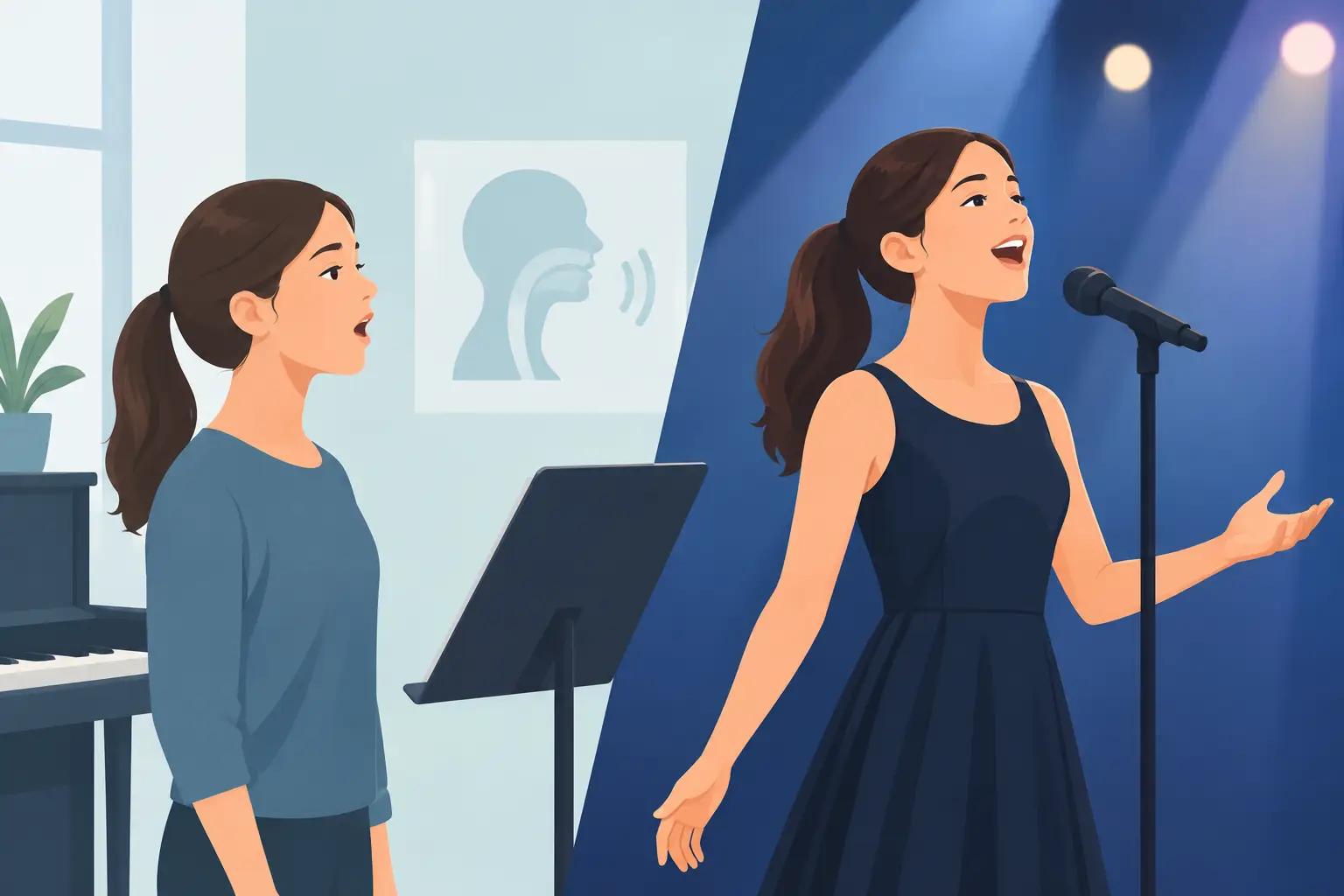
A child can sing every note correctly in a studio and still freeze when the music starts onstage. Another may light up an audience with personality but struggle to sustain a phrase with healthy technique. That is why vocal exams vs performance training is not a simple choice between “serious” learning and “fun” learning. Each develops a different part of a young performer.
For parents and aspiring singers, the best path depends on what the student needs now, where they hope to go next, and how they learn best. In many cases, the strongest performers benefit from both structured assessment and regular stage-focused practice.
What Vocal Exams Develop
Vocal exams provide a clear framework for building technique. A recognized syllabus gives students progressive goals, from foundational posture and breathing to repertoire interpretation, musicianship, and vocal control. Instead of measuring improvement only by whether a song sounds good, an exam helps identify the skills underneath the performance.
For a young singer, this structure can be especially reassuring. They know what they are working toward, what is expected at each level, and how their progress is being assessed. Preparing for an examination also develops discipline: students learn to practice consistently, remember lyrics accurately, refine diction, and perform prepared pieces under focused conditions.
International syllabi such as London College of Music can add useful credibility for students who enjoy working toward formal milestones. Certificates and grades may also motivate a child who responds well to tangible achievements. For teens considering arts-related auditions or more advanced training, a documented progression can show commitment and technical development.
The strengths of an exam-based pathway
A well-taught vocal exam program helps students establish healthy habits early. They learn how to support the voice rather than push it, listen carefully for pitch and rhythm, and communicate the meaning of a song with greater intention. These are not minor details. Good technique supports vocal longevity, particularly as children grow and their voices change.
Exams also encourage precision. Students are expected to prepare songs thoroughly rather than relying on familiarity or natural confidence. That can be a valuable lesson for a performer who tends to rush, guess at notes, or lose focus when a piece becomes challenging.
Still, an exam result is only one measure of growth. A student can earn a strong mark and still need more experience adapting to a live audience, moving with confidence, or connecting naturally with an ensemble.
What Performance Training Builds
Performance training focuses on what happens when technique must work in real time. Students learn to sing while moving, maintain focus under lights, take direction quickly, work as part of a group, and recover if something goes wrong. These are the skills that turn a prepared singer into a stage-ready performer.
This kind of training is particularly valuable for children and teens drawn to musical theater, show choir, pop performance, dance-vocal work, school showcases, and auditions. They need more than an accurate voice. They need presence, stamina, expression, timing, and the confidence to make an audience feel something.
At MADDspace, performance-centered training can bring singing together with movement, drama, and ensemble awareness. That integrated experience matters because performers rarely work in isolation. They may need to enter on a musical cue, hold character while dancing, blend with other voices, and project energy all the way to the final count.
Performance confidence comes from repetition
Confidence is not simply a personality trait. It is built through repeated, supported exposure to performing. A shy child may not suddenly become outgoing after one concert, but they can become more comfortable through regular opportunities to rehearse, receive constructive feedback, and share their work in front of others.
Performance training also teaches flexibility. Live situations are unpredictable: a microphone may feel unfamiliar, another performer may miss a cue, or nerves may affect the first line of a song. Students who have practiced performing learn to stay present and continue with purpose.
The trade-off is that stage-based classes can sometimes make it easier to hide technical gaps. A confident student with strong energy may receive praise for an exciting performance while still needing focused work on breath support, tuning, or vocal placement. That is why skilled instruction should never treat performance and technique as separate worlds.
Vocal Exams vs Performance Training: Which Is Right?
Start with the student, not the certificate or the spotlight. A child who loves detail, enjoys clear targets, and is motivated by steady progression may thrive with vocal exams. An expressive student who learns by doing, wants to perform with others, or dreams of musical theater may benefit most from performance training.
Age and experience matter too. Younger beginners often need a joyful, encouraging environment that helps them discover their voice without pressure. As they build confidence, structured vocal goals can become more meaningful. Older students with a strong interest in singing may be ready to balance exam preparation with more challenging stage work, especially if they are preparing for auditions or school productions.
It also depends on the family’s goals. If a parent wants their child to develop discipline, musical literacy, and recognized milestones, exams can provide a valuable roadmap. If the priority is confidence, expression, teamwork, and the ability to perform in public, a performance-focused program may be the better immediate fit.
Neither choice should be treated as permanent. A student who starts with exams may discover a love of performing. A student who begins onstage may later want the structure and technical challenge of a formal vocal qualification.
Why Many Young Singers Need Both
The most complete training pathway often combines the best of both approaches. Vocal technique gives a performer control. Performance training gives that control a purpose.
Consider a student preparing a contemporary song. Exam preparation may help them shape vowels, manage breath, keep accurate rhythm, and understand the style of the piece. Performance training asks different questions: Where should they look? How should they stand? Does their expression match the lyrics? Can they communicate while moving? Do they still sound stable after choreography?
Together, these questions create a more capable artist. The student does not have to choose between sounding polished and feeling believable. They learn to do both.
This balance is also helpful for students with advanced ambitions. Audition panels and creative teams often look for more than one strength. They want a performer who can take direction, learn material efficiently, work with others, and bring a reliable technique to rehearsals. Formal achievement can demonstrate discipline, while performance experience shows how a student applies that discipline under pressure.
Questions Parents Can Ask Before Enrolling
Before choosing a class or pathway, ask what kind of progress the program is designed to support. Is there a clear technical foundation? Are students given performance opportunities that match their age and readiness? Does the teacher offer specific feedback, rather than general praise? Is there room for a student to progress from beginner learning into more focused vocal, dance, drama, or artiste development training?
It is also worth observing how your child responds after class. Do they leave energized, challenged, and proud of something they learned? A little nervousness is normal, especially before performing, but the right environment should make them feel supported enough to keep trying.
For students who are uncertain, a trial class can reveal more than a long conversation. Watch whether they engage with the teacher, follow the structure, and show curiosity about the work. The goal is not to find instant talent. It is to find a training environment where effort can become progress.
A young singer does not need to have their future mapped out before they begin. Give them a place to build sound technique, take a few brave steps onto the stage, and discover what kind of performer they are becoming.


Comments