


Performing Arts Classes for 3 Year Olds
- John Khoo
- Apr 30
- 6 min read

Three-year-olds do not need a stage career. They need a room that is well-led, music that invites movement, and teachers who know how to turn short attention spans into joyful progress. That is why performing arts classes for 3 year olds can be such a strong early enrichment choice - not because preschoolers need pressure, but because the right class gives their energy direction.
At this age, children are learning through imitation, repetition, rhythm, and play. A well-designed performing arts class meets them exactly there. It looks fun on the surface, and it should. Underneath that fun, though, there should be structure, developmental purpose, and teachers who understand how young children grow in confidence.
Why performing arts classes for 3 year olds work so well
A three-year-old is in a major season of development. Language is expanding quickly. Coordination is improving, but still emerging. Emotional expression is big, sometimes unpredictable, and often physical. Performing arts can support all of that in a very natural way.
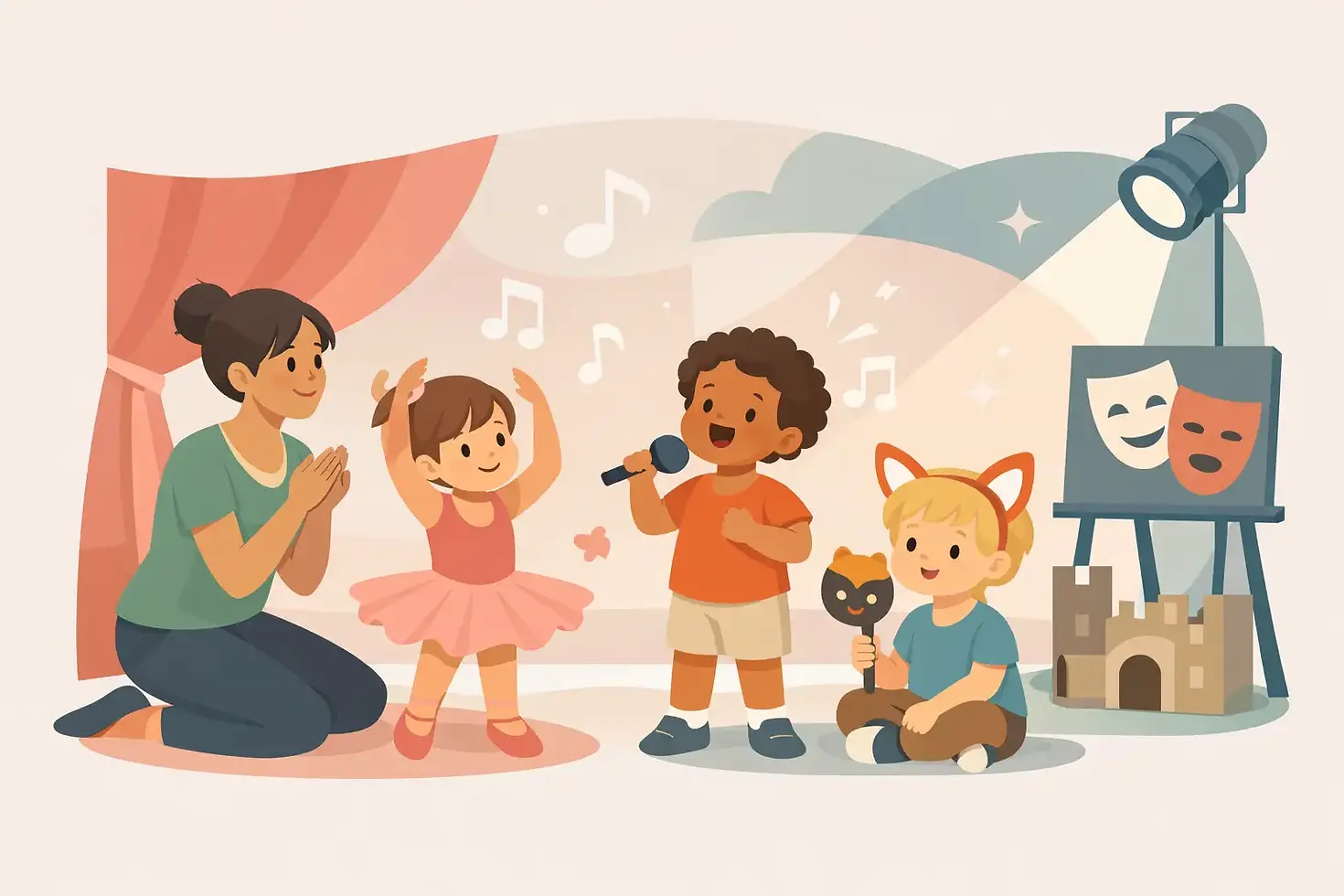
Music helps children hear patterns, follow cues, and develop memory. Dance builds balance, body awareness, and control. Drama encourages imagination, listening, and expressive communication. When these disciplines are combined thoughtfully, children get a fuller experience than they would from sitting and learning one skill in isolation.
That does not mean every child needs formal technique at three. In fact, classes that feel too rigid too early can backfire. The goal is not perfection. The goal is guided participation - learning to move with music, respond to instruction, join group activities, and enjoy performing simple actions with growing confidence.
What a quality preschool performing arts class should include
Parents often assume any music-and-movement session will do. Sometimes that is enough for casual exposure. But if you want a class that genuinely supports development, a few things matter.
First, there should be a clear structure. Three-year-olds thrive when classes follow a predictable rhythm. A strong session might begin with a welcome song, move into basic movement patterns, introduce imaginative drama play, and end with a simple routine or cooldown. That consistency helps children settle in and participate more fully over time.
Second, the teaching needs to be age-appropriate. Preschoolers are not mini older kids. They need short activity segments, visual demonstration, positive reinforcement, and room to warm up at their own pace. Good teachers know how to keep momentum without overwhelming the group.
Third, the class should blend creativity with discipline. This is where many parents see the real value. Children are encouraged to explore, but within boundaries. They learn to take turns, watch the teacher, follow musical cues, and move with intention. Those are early performance habits, but they are also life skills.
Signs your child is ready
Not every three-year-old enters a class in the same way. Some run straight in. Others cling to a parent for the first few sessions. Both can be completely normal.
Readiness is less about talent and more about temperament. If your child enjoys music, likes pretend play, responds to songs or movement games, or is starting to participate in group settings, they are likely ready to try. Even shy children can do very well, especially when the environment is warm and consistent.
If your child struggles heavily with transitions, has a very limited tolerance for group routines, or becomes distressed in new environments, it may still be possible to begin - but the class style matters even more. In those cases, a gentle trial class is often the best way to see fit without pressure.
What parents should look for in performing arts classes for 3 year olds
A premium class is not just about a polished studio. It is about how intentionally the program is built.
Look for teachers with real experience in early childhood instruction, not just performance backgrounds. A brilliant dancer or vocalist is not automatically effective with preschoolers. Young children need instructors who can manage energy, guide behavior positively, and keep lessons engaging without losing educational value.
It also helps to choose a program that offers progression. At age three, your child is only beginning. But a well-run academy should already understand where that beginning can lead. Today it may be sing-and-dance basics. Later, it could become stronger dance training, drama confidence, vocal development, or age-based performance programs. That sense of pathway matters because it means the preschool class is not random babysitting with music - it is the first step in a thoughtful training journey.
Parents should also pay attention to class size. Too large, and children disappear into the crowd. Too small, and the group energy can feel flat. The best balance gives enough social interaction for ensemble learning while still allowing each child to be seen and guided.
The benefits parents often notice first
The obvious benefits are usually physical and social. Children become more willing to move, copy actions, clap in time, and join in songs. They often become more comfortable in a group and more confident about being seen.
But some of the most valuable gains show up outside the studio. Parents may notice stronger listening, better turn-taking, clearer expression, and improved willingness to try something new. A child who once hesitated may start performing a classroom song at home with pride. That kind of confidence is hard to force, but performing arts can grow it steadily.
There is also a big difference between noisy activity and focused expression. Good classes teach children how to channel their energy. That matters for preschoolers who love to move but do not yet know how to control that movement with purpose.
What a trial class should tell you
A trial class is not about whether your child does everything perfectly on day one. It is about whether the environment feels right.
Watch how the teacher welcomes children who are excited, distracted, shy, or hesitant. Watch whether instructions are clear and upbeat. Notice whether the class has momentum. Preschool sessions should move briskly, but not chaotically.
Also pay attention to the emotional tone. The best classes feel encouraging and organized at the same time. There is room for fun, but there is still leadership in the room. That balance is especially important if you want your child to enjoy the experience now and also build a foundation for future training.
When fun and training should meet
Some parents worry that a structured class will be too serious for a three-year-old. Others worry that a playful class will not teach enough. The truth is that the best preschool performing arts programs do both.
At this age, fun is not separate from learning. It is how learning happens. A child pretending to be an animal in a movement exercise is developing coordination, musical response, and expressive confidence. A child repeating a simple action song is building memory, timing, and focus. The teaching just needs to be intentional enough to turn play into progress.
This is where a specialized academy can make a real difference. When a preschool program sits inside a larger performance training environment, there is often more clarity around standards, progression, and teaching quality. At MADDspace, for example, early years classes sit within a broader culture of structured vocal, dance, drama, and performance development, which gives parents confidence that even beginner experiences are thoughtfully designed.
Choosing the right class for your family
The best class is not always the most intense one. It is the one your child will engage with consistently.
If your child is brand new to group activities, a preschool sing-and-dance format is often the strongest entry point. It combines music, movement, and expression without expecting too much specialization too early. If your child already loves performing, you may want a program that still stays age-appropriate but is led with a bit more precision and purpose.
Practical details matter too. Class timing, travel, teacher consistency, and whether your child has the stamina for the schedule all affect success. Even the most exciting program will be hard to sustain if it does not fit your weekly routine.
The key is to think beyond entertainment. You are not simply filling an hour. You are choosing an environment that can shape how your child experiences music, movement, confidence, and learning itself.
For many families, that is exactly why starting at three makes sense. It is early enough to build comfort, curiosity, and strong habits before self-consciousness sets in. And when the class is led with warmth, quality, and real developmental understanding, those first small steps in the studio can become something much bigger - not pressure, not performance for performance's sake, but a confident start.


Comments