


Do You Need a Vocal Coach to Learn to Sing?

Some singers figure out a lot on their own - until they hit the same wall again and again. The high notes feel tight, breathing gets messy, pitch slips under pressure, or confidence disappears the second someone is listening. That is usually when the real question shows up: do you need a vocal coach to learn to sing, or can practice alone get you there?
The honest answer is no, a vocal coach is not mandatory for every singer. But if your goal is to sing well, improve efficiently, and build reliable technique instead of guessing your way through it, good coaching can make a huge difference.
Do you need a vocal coach to learn to sing if you're a beginner?
If you are brand new, you can absolutely start singing without a coach. Many beginners learn basic melody, rhythm, and confidence simply by listening, repeating, and practicing regularly. A child who loves music, a teen preparing for a school performance, or a young adult exploring musical theater can all make a real start at home.
The catch is that beginners usually cannot hear everything they are doing. They may not notice when they are singing flat, tensing the jaw, lifting the chin for higher notes, or pushing too much air. These habits can settle in quickly. Once they become automatic, they take more time to fix.
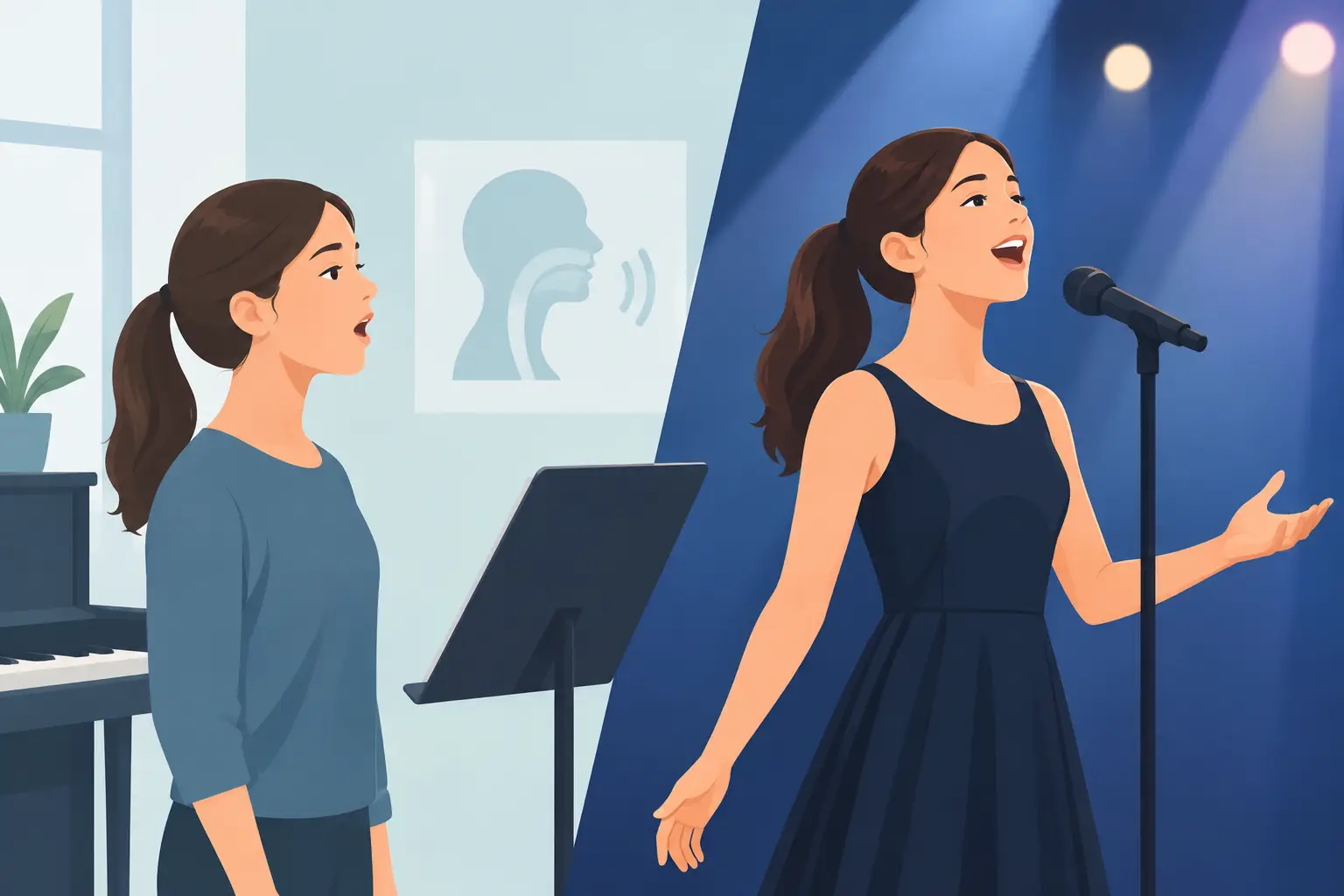
That is where coaching earns its value. A strong vocal teacher does more than say "sing louder" or "try again." They listen for coordination, breathing, tone, placement, diction, phrasing, and stamina. They also know how to give the right exercise at the right stage, instead of overwhelming a student with too much too soon.
For young singers especially, structure matters. Enthusiasm is a great starting point, but steady progress usually comes from guided training, clear goals, and age-appropriate technique.
What a vocal coach actually helps with
A lot of people think vocal coaching is only for advanced singers or students preparing for big auditions. In reality, coaching is often most useful much earlier, when technique is still forming.
A coach helps a singer understand how the voice works in practice, not just in theory. That includes breath control, pitch accuracy, vocal range development, resonance, clear tone, and healthy production. It also includes the performance side of singing, which many self-taught students overlook. Singing is not just about hitting notes. It is about communication, style, confidence, and consistency.
For children and teens, this matters even more because their voices and bodies are still developing. A trained instructor can adjust exercises to suit age, maturity, and current ability. They can also spot when a student is trying to force sound instead of building technique properly.
In a performance-centered training environment, students also learn musicality, stage presence, expression, and ensemble awareness. Those skills are hard to build through random online practice alone.
When self-teaching can work
Self-teaching is not useless. In fact, it can be a very good starting point for motivated learners. If a singer has a strong ear, good musical instincts, and the discipline to practice consistently, they may improve quite a bit on their own.
This is especially true for early goals like matching pitch, learning simple songs, getting comfortable with rhythm, or singing casually for enjoyment. There are plenty of singers who begin by copying songs, recording themselves, and making gradual improvements over time.
But self-teaching works best when the goal is modest or the student is unusually aware of what they are hearing and feeling. Once the music becomes more demanding, the limits start to show. Range issues, vocal fatigue, inconsistent tone, and performance nerves rarely solve themselves just because someone keeps repeating the same song.
Practice helps. Correct practice helps more.
Signs you would benefit from a vocal coach
If singing feels harder than it should, that is often a clue. Strain on high notes, weak breath support, trouble staying on pitch, or a voice that gets tired quickly are all common signs that technique needs attention.
Another sign is inconsistency. Maybe you sound good one day and frustratingly off the next. Maybe rehearsals go fine, but live performance feels shaky. A coach can identify what is changing and why.
Young performers also benefit from coaching when they are preparing for concerts, showcases, school productions, competitions, or exams. In those situations, it is not just about singing the song. It is about delivering it with control and confidence.
Parents often notice the need before the student does. A child may love to sing, but if they want to improve seriously, join a show choir, explore musical theater, or build toward more advanced training, guidance gives them a stronger foundation.
Do you need a vocal coach to learn to sing well?
If the question is not just "can I sing" but "can I sing well," the answer changes a bit. You do not need a vocal coach in every case, but most singers who reach a strong, dependable standard get some form of skilled guidance along the way.
That is because singing well is not only about talent. It is about coordination and repeatability. Can you sing in tune when the room is noisy? Can you support long phrases? Can you switch styles without losing control? Can you perform when nerves kick in? These are trainable skills.
A coach shortens the learning curve. Instead of relying on trial and error, the singer gets informed feedback and a path forward. That does not remove the need for hard work. It just means the work is pointed in the right direction.
Group classes vs private lessons
Not every student needs the same kind of coaching. For some, group vocal training is a great entry point. It builds confidence, musicianship, listening skills, and ensemble habits in an encouraging setting. It can also be especially effective for younger students who thrive on energy, routine, and peer learning.
Private lessons become more valuable when a singer needs detailed technical attention, is working toward a specific performance goal, or is progressing at a pace that benefits from individualized feedback. A student preparing for auditions or advanced repertoire usually needs that level of focus.
The right choice depends on age, goals, personality, and current skill level. Some students do best with a combination of both - structured class training for broader performance development and one-on-one coaching for personal vocal technique.
Why the right coach matters as much as coaching itself
Not all vocal instruction is equal. A good coach should know how to teach, not just how to sing. That difference matters.
For parents, this is especially important. A child or teen needs more than praise or pressure. They need instruction that is technically sound, age-appropriate, and motivating. The best training environments build discipline without draining the joy out of singing.
Strong programs also offer progression. That means students are not left repeating the same exercises forever with no sense of development. They move through levels, build measurable skills, and gain real performance experience. At MADDspace, that kind of structured pathway matters because students are not just learning songs. They are developing as performers.
So, can you learn without one?
Yes. You can learn to sing without a vocal coach.
But if you want to avoid bad habits, improve faster, sing with more control, and grow in both technique and performance, a vocal coach is often the smartest investment you can make. That is true for beginners, and it becomes even more true as goals get bigger.
The better question may not be whether coaching is necessary. It may be whether you want to spend months guessing at problems that an experienced teacher could spot in minutes.
Singing should feel exciting, not confusing. With the right guidance, progress becomes clearer, confidence grows faster, and the voice has room to develop the right way. For a young singer with ambition, that can change everything.


Comments