


Musical Theatre Training Singapore Parents Trust

A child who loves to sing in the car, copy choreography from videos, and act out every story is already telling you something. They do not just want another activity to fill the week. They are asking for musical theatre training Singapore families can trust to turn raw enthusiasm into real skill.
That matters because musical theatre is not one skill. It is the ability to sing with control, move with confidence, act with intention, and bring all three together under pressure. For parents, that means the right training environment has to do more than keep a student entertained. It has to build technique, discipline, and performance readiness in a way that still feels exciting.
What strong musical theatre training in Singapore should include
A lot of programs say they teach musical theatre when they really mean children learn a routine, sing along to a track, and perform at the end of term. There is nothing wrong with fun exposure, especially for beginners. But if a student is going to grow, the training needs structure.
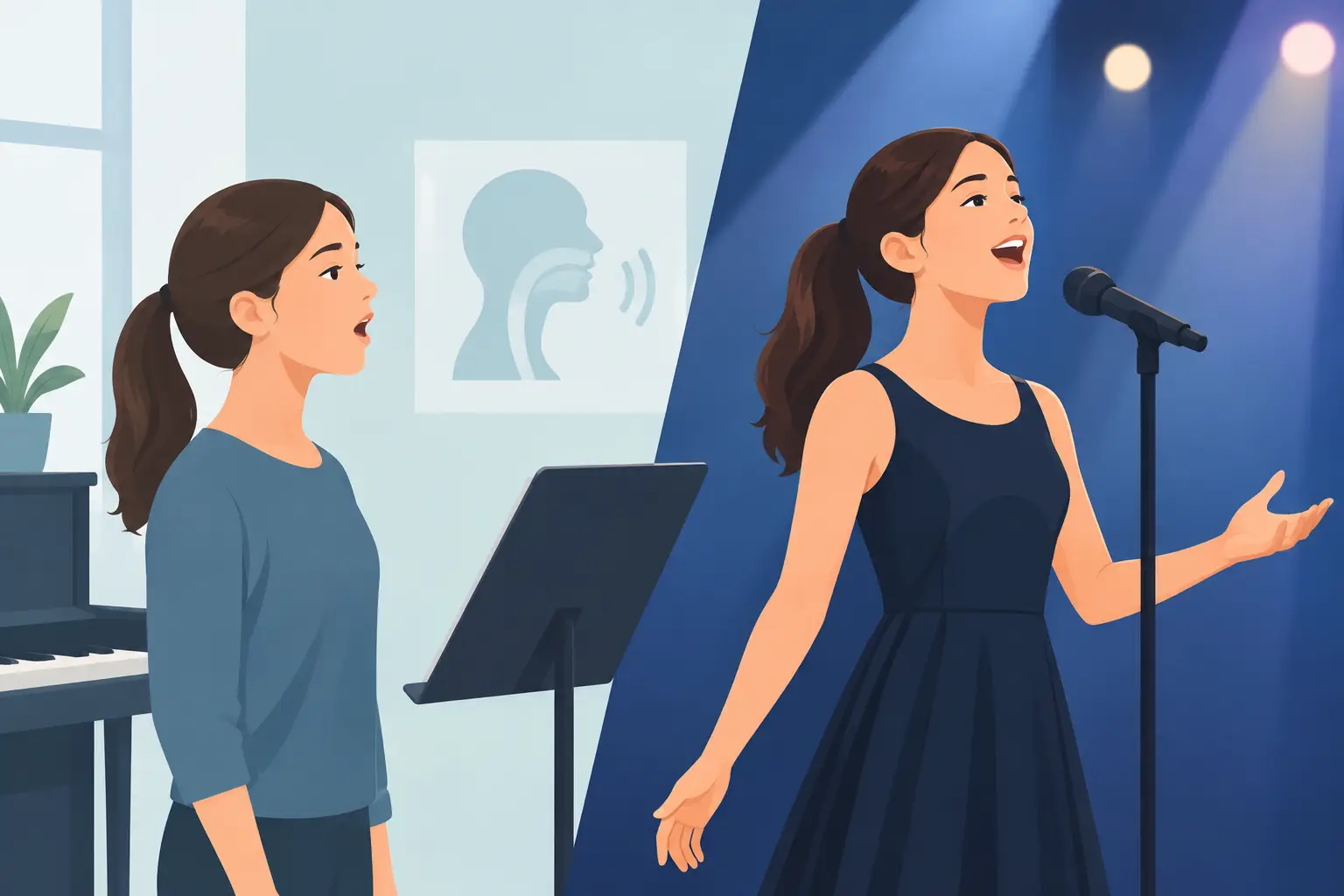
Strong musical theatre instruction develops voice, dance, and drama as connected disciplines. Singing classes should teach pitch, tone, breath support, diction, and musicality. Dance training should build rhythm, coordination, posture, body awareness, and the ability to learn choreography accurately. Drama work should help students understand character, storytelling, expression, and stage confidence.
The difference shows up quickly. Students with balanced training do not just look enthusiastic on stage. They know how to project, how to hold focus, how to stay present in a group number, and how to recover when something goes off script.
That is why serious musical theatre training in Singapore should not feel random. It should feel progressive.
Why parents should look for a clear progression path
Children develop at different speeds, and a good academy respects that. A preschooler needs playful introduction and movement-based learning. A school-age child can handle more technique, musical detail, and performance discipline. A teen often needs refinement, stronger stage presence, and training that supports auditions, showcases, or more advanced goals.
Without a progression path, students often plateau. They may enjoy class, but they keep repeating the same level of work. That can be frustrating for ambitious students and hard for parents to evaluate.
A better approach is age-based and skill-based programming with room to grow. Beginners should feel welcome, but intermediate and advanced students should also have somewhere to go next. This is especially important in musical theatre because confidence and technique do not always grow at the same pace. A child may be bold on stage but need vocal control. Another may sing beautifully but need help with movement and acting choices.
A well-designed pathway allows those strengths and gaps to be addressed over time rather than ignored.
The role of recognized syllabi and structured benchmarks
For many parents, one big question is simple: how do I know the training is actually good?
One useful answer is structure. When an academy aligns parts of its instruction with recognized syllabi, families get more than a vague promise of quality. They get a framework that supports technical development and progression.
In musical theatre, that matters because the field is creative but not casual. Students still need measurable growth. Vocal work should improve. Performance skills should mature. Movement technique should become cleaner and more controlled.
International syllabi can help create that consistency. They give students a standard to work toward and help parents understand that training is not being improvised from week to week. At the same time, syllabus-based instruction should not make classes rigid. The best programs use formal benchmarks while keeping lessons lively, performance-centered, and age-appropriate.
That balance is where strong academies stand out. They combine credibility with energy.
Not every student needs the same kind of training
This is where many families get stuck. A parent may think, my child likes performing, but are they serious enough for musical theatre classes? Or a teen may wonder whether they need broad stage training or just one focused discipline.
The honest answer is that it depends on the student.
Some children benefit most from a broad foundation. They may not know yet whether singing, dance, or acting is their strongest area, so integrated training makes sense. It gives them exposure, builds confidence, and develops versatility early.
Other students already show a clear passion for performing as a whole. They want stagecraft, characterization, ensemble awareness, vocal expression, and choreography in one training track. For them, musical theatre is the natural fit.
Then there are students with bigger goals. They may want performance opportunities, stronger coaching, or advanced development that sharpens them for auditions and more demanding stage work. These students still need encouragement, but they also need challenge.
A premium academy understands those differences. It does not force every learner into the same lane.
What to watch for in a trial class
A trial class can tell you a lot if you know what to look for.
First, watch the teaching. Is the class simply busy, or is it purposeful? High-energy sessions are great, but energy alone is not enough. The instructor should be able to keep students engaged while still correcting technique, setting expectations, and moving the class forward.
Second, notice whether students are being taught to perform, not just participate. Are they learning expression? Are they being encouraged to listen, respond, and connect their movement to the music? Do they understand why a scene or song is being delivered a certain way?
Third, consider the environment. The best training spaces are encouraging, but they are not chaotic. Students should feel safe to try, fail, improve, and perform again. Parents should be able to sense both warmth and standards.
Finally, ask yourself whether the class feels like part of a bigger journey. That often matters more than the single lesson itself.
The advantage of multidisciplinary training under one roof
One of the smartest ways to build a young performer is to avoid fragmented training. If voice is taught in one place, dance in another, and stage performance somewhere else entirely, students can improve in each area but still struggle to integrate them.
Musical theatre demands coordination across disciplines. A student has to sing while moving, stay expressive while remembering choreography, and maintain technique while performing for an audience. That gets much easier when the training culture is connected.
This is where an academy model is especially valuable. When vocal, dance, drama, and performance instruction sit within one structured environment, students develop more cohesively. Teachers can build toward shared expectations. Families also get a clearer sense of progression instead of trying to piece together a training plan on their own.
For many parents, that creates practical value as well as educational value. It saves time, reduces guesswork, and gives students continuity.
Why performance opportunities matter
Technique matters. So does what happens when the lights come on.
Students need chances to apply what they are learning in front of others. That does not always mean a large-scale production. It can mean showcases, studio performances, or presentation-based class work that teaches students to handle nerves, timing, group awareness, and stage presence.
Performance opportunities reveal strengths and expose growth areas in a useful way. A student who seems confident in class may freeze in front of an audience. Another may come alive under pressure. Both experiences are valuable when supported by good teaching.
This is also where confidence becomes more than a buzzword. Real confidence is not built by praise alone. It comes from preparation, repetition, correction, and the experience of doing something difficult well.
That is why the strongest academies train for the stage, not just for the classroom.
Choosing a program that grows with your child
The best musical theatre training is not always the flashiest. It is the program that matches a student’s current stage while still making room for what comes next.
For younger children, that may mean joyful, structured classes that build coordination, listening, expression, and comfort in front of others. For older kids and teens, it often means more technical demand, higher performance standards, and coaching that sharpens both artistry and discipline.
Parents should look for a program that is ambitious without being intimidating. Students should feel inspired to stretch. They should also feel supported enough to keep going when the work gets harder.
That combination of encouragement and rigor is what helps performers last. At MADDspace, that philosophy is especially clear in a training model built around progression, recognized syllabi, and performance-centered development across voice, dance, and stagecraft.
If your child lights up when music starts, watches every stage performance with total focus, or keeps asking for more than a casual class, pay attention. The right training will not change who they are. It will give their talent direction, discipline, and a place to grow.


Comments