


8 Best Vocal Warmups for Young Singers

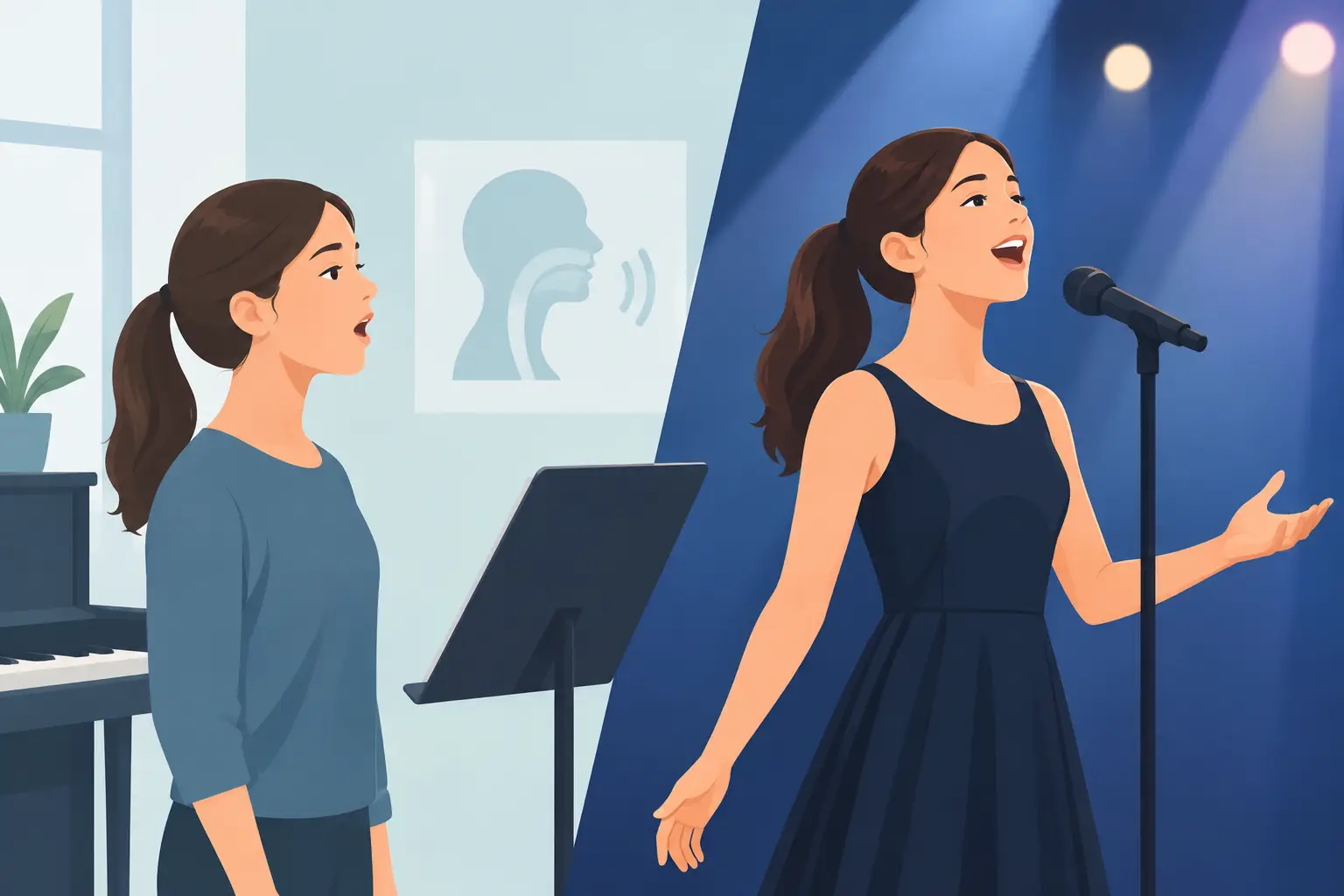
A child who runs onto the stage without warming up usually sounds exactly like that - rushed, tight, and not fully ready. The best vocal warmups for young singers are not about doing more for the sake of it. They are about preparing the voice with purpose, so young performers can sing with better control, clearer tone, and more confidence from the very first phrase.
For parents, it helps to know that a good warmup is not meant to feel intense or dramatic. For children and teens, the voice responds best to short, focused exercises that build healthy habits over time. The goal is not volume. The goal is coordination.
Why the best vocal warmups for young singers are different
Young voices are still developing. That means warmups should support natural vocal growth rather than push for power, extreme range, or an overly mature sound. A 9-year-old and a 16-year-old may both love singing, but they do not need the same intensity, key, or technical focus.
This is where many singers get into trouble. They copy adult artists, belt too early, or treat warmups like a test. In reality, the strongest routine for young singers usually starts gently, stays consistent, and matches the singer's age, experience, and current repertoire.
If a student is preparing for musical theater, show choir, school performances, or exams, the warmup may need to be slightly more structured. If they are very young, playful sound-making often works better than highly technical instructions. It depends on the singer, but the principle stays the same - warmups should prepare, not strain.
8 best vocal warmups for young singers
1. Easy stretching and posture reset
Before any sound comes out, the body needs to be ready. Young singers often carry tension in the shoulders, jaw, neck, or knees without realizing it. A simple posture reset can make an immediate difference.
Start with relaxed shoulders, a long spine, soft knees, and a loose jaw. Gentle neck rolls and shoulder rolls are enough. There is no need for anything athletic or exaggerated. The point is to help the singer stand in a way that supports easy breathing and free sound.
2. Breathing patterns with steady airflow
Breath work is one of the best places to begin because it teaches control without pressure on the throat. Ask the singer to inhale quietly, then release the air on a soft hiss for several counts. This helps build awareness of steady airflow, which is essential for stable pitch and smooth phrasing.
For younger children, this can be taught as a game. For older students, it becomes a foundation for sustained notes and dynamic control. The key is not taking the biggest breath possible. It is learning to manage breath efficiently.
3. Lip trills and raspberries
Lip trills are one of the most reliable warmups for young voices because they encourage airflow and reduce unnecessary throat tension. They are also easy to recognize - the sound feels buzzy and playful, which makes them less intimidating for children.
Singers can glide from low to high and back down on a lip trill, or use short five-note patterns. If a student cannot sustain the trill, that usually points to breath inconsistency or tension, which makes this exercise useful for teachers and parents to observe.
4. Humming for resonance
A gentle hum helps young singers find vibration and focus in the sound without forcing volume. It is especially effective for singers who tend to push or sing too loudly too soon.
Start in a comfortable middle range and use short patterns. The feeling should be relaxed and forward, not swallowed or pressed. If the jaw starts tightening, the exercise loses its benefit. A light hum is enough.
5. Sirens on “oo” or “ng”
Sirens help connect registers and reduce breaks in the voice. This is one of the best vocal warmups for young singers who are learning how to move smoothly through different parts of their range.
Using “oo” or “ng,” slide up and down gently like a siren sound. Keep it easy and unforced. The point is not to reach the highest possible note. The point is to keep the voice connected and flexible.
For changing adolescent voices, especially in the teen years, this exercise can be very helpful when handled carefully. It allows the singer to explore range without locking into tension.
6. Five-note scales on simple vowels
Once the voice is awake, short scale patterns can build pitch accuracy, vowel clarity, and coordination. Five-note scales on “mee,” “mah,” or “noo” are common because they are clear and manageable.
This is where supervision matters. Some vowels brighten the sound and some encourage warmth, but not every pattern suits every singer. If the tone becomes shouty or spread, the key may be too high or the vowel may need adjusting. Good warmups are responsive, not rigid.
7. Articulation exercises for clear lyrics
Young performers often focus so much on melody that the words become muddy. Simple articulation warmups help with diction, especially for musical theater, show choir, and stage performance.
Try spoken or lightly sung consonant combinations such as “buh,” “duh,” and “guh,” or simple tongue twisters at a moderate speed. This should sharpen clarity without creating jaw tension. Faster is not better if the singer starts clenching.
8. Short song-based warmups
The final step is to bridge technique into actual performance. A few lines from a song, spoken rhythmically first and then sung with intention, can help young singers transition from exercise mode into artistic delivery.
This matters more than many people realize. Some children sound great in warmups but lose their technique as soon as the song starts. A short song-based warmup helps connect breath, diction, posture, and expression in a practical way.
How long should a vocal warmup be?
For most young singers, 10 to 15 minutes is enough. Preschool and early elementary students may need even less, especially if the exercises are focused and engaging. Teen singers working on more demanding repertoire may benefit from a slightly longer routine, but longer does not automatically mean better.
If the voice sounds more tired than free after warming up, the routine is too much. The best warmups leave the singer feeling prepared, not worn out.
Common mistakes parents and young singers should avoid
One of the biggest mistakes is singing too high, too loudly, or too early in the session. Another is using the same warmup every day without considering what the singer actually needs. A student preparing for a soft ballad may need a different approach than one rehearsing an upbeat ensemble number.
It is also common to mistake effort for progress. Young singers do not need to push to improve. In fact, healthy vocal training often looks controlled, consistent, and surprisingly simple from the outside.
Hydration, rest, and pacing matter too. Warmups are helpful, but they cannot fix vocal fatigue caused by yelling, poor sleep, or overuse. If a singer is consistently hoarse, breathy, or uncomfortable, that is a sign to pause and get proper guidance.
Building a routine that grows with the singer
The strongest warmup routine is one that can evolve. A younger child may begin with humming, posture, and playful sirens. An older student may add breath pacing, resonance work, articulation, and repertoire-specific exercises. Both are valid if they match the singer's stage of development.
In structured training, warmups also become a teaching tool. They reveal habits, strengths, and areas that need attention. That is why in performance-focused environments such as MADDspace, warmups are not treated as filler before the real singing starts. They are part of the training itself.
When a singer learns how to warm up well, they gain more than a better sound. They develop discipline, body awareness, and the confidence that comes from being genuinely prepared.
When to get extra support
If a child loves singing but struggles with pitch, tension, breathing, or confidence, a better warmup can help, but instruction matters. The right teacher can adjust keys, choose age-appropriate exercises, and spot habits that a parent or student may miss.
That is especially valuable for singers moving into auditions, graded exams, group performance, or more advanced repertoire. Good technique is built step by step, and warmups are one of the clearest places where that foundation begins.
A young singer does not need an elaborate routine to sound more polished. They need the right exercises, done consistently, with healthy guidance and clear purpose. Start simple, stay age-appropriate, and let the warmup set the standard for every song that follows.


Comments