


Teen Artiste Development Guide for Stage-Ready Growth

A strong performance is not built in the week before an audition or showcase. It is built through the quieter work: repeating choreography until it feels natural, learning how to support a vocal phrase, taking direction without losing confidence, and showing up prepared. This teen artiste development guide helps families understand what serious training should look like when a young performer is ready to move beyond casual classes.
For teens, performing arts training can be a place to have fun, make friends, and develop confidence. It can also become a focused pathway toward auditions, school productions, live showcases, and more advanced artistic goals. The best next step depends on the student, but a thoughtful program should give ambition a clear structure.
What Artiste Development Means for Teens
Artiste development is not about turning every teen into a celebrity. It is about helping a performer build the technical, creative, and professional habits needed to present their best work on stage.
A developing artiste learns more than a song or a dance routine. They learn how to communicate a lyric, hold focus under pressure, move with purpose, work as part of an ensemble, and recover when something goes wrong. These skills take time because performance is both physical and personal. A teen may have a naturally appealing voice or strong rhythm, yet still need guidance in consistency, expression, stamina, and stage presence.
The strongest programs bring disciplines together. Vocal training develops healthy technique, pitch accuracy, phrasing, and interpretation. Dance training builds coordination, musicality, control, and confidence in movement. Drama and performance coaching help students understand character, intention, timing, and audience connection. When these elements are trained together, performers become more adaptable and convincing.
That does not mean every student must pursue every discipline at the same intensity. A singer preparing for musical theater may need focused movement and acting support. A dancer interested in K-pop performance may benefit from vocal confidence and stronger facial expression. Development works best when training is shaped around the teen's current strengths and future goals.
A Teen Artiste Development Guide Starts With Goals
Before choosing an advanced class or private coaching plan, define what the teen wants to work toward over the next six to 12 months. A useful goal is specific enough to guide training but flexible enough to allow growth.
For one student, the goal may be to perform confidently in a school concert. For another, it may be to prepare an audition piece, improve dance foundations, or build the versatility required for musical theater. Some teens want to explore their potential before making a bigger commitment. That is valid too. Serious training does not require a fixed career decision at age 13 or 15.
Parents can help by asking practical questions. Does the student enjoy singing, dance, acting, or a combination? Do they respond well to group training, or do they need occasional individual attention? Are they excited by live performance, or are they still building the courage to step forward? Honest answers make it easier to select a program that challenges rather than overwhelms.
A good academy should recognize that progress is not always linear. Growth may look like stronger technique one term, then improved confidence and stage awareness the next. The goal is not perfection at every lesson. It is measurable development over time.
Build Technique Before Chasing the Spotlight
Teens often see polished performances online and want to recreate the finished result immediately. There is nothing wrong with inspiration, but polished performance rests on fundamentals. Without them, a student may push their voice, lose clarity in choreography, or rely on facial expressions and energy when the technique is not yet secure.
Vocal technique should include posture, breath management, placement, range development, diction, and healthy singing habits. Dance technique should cover alignment, strength, flexibility, rhythm, coordination, and movement quality. Performance training should address projection, focus, spatial awareness, and how to make choices that support the music or character.
This is where structured progression matters. A class designed for teens should not simply offer harder choreography than a junior class. It should give students age-appropriate technical challenges, clearer artistic expectations, and opportunities to apply what they learn in performance settings.
Recognized syllabi can also add value for families seeking a clear framework. They help organize learning milestones and encourage students to understand technique, not just memorize material. However, credentials alone are not the whole picture. Teens still need instructors who can teach with energy, give precise feedback, and create an environment where students feel safe enough to take creative risks.
Performance Experience Makes Training Real
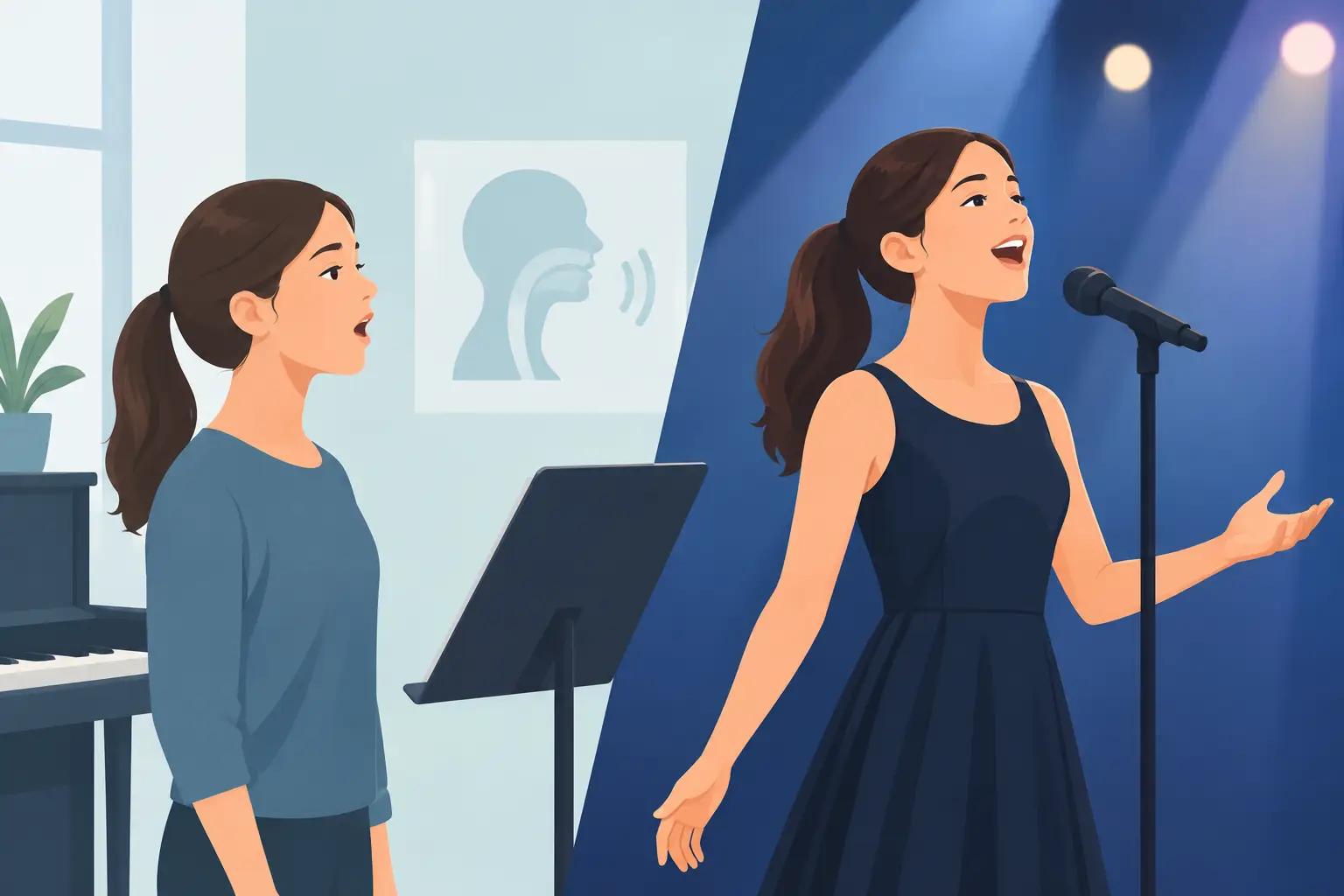
Practice develops ability. Performance reveals what needs attention.
A teen who sings confidently in a studio may discover that they need more breath control under stage lights. A dancer who knows every count may realize that their energy drops after the first minute. These are not failures. They are valuable lessons that cannot be learned fully from rehearsal alone.
Regular performance opportunities help students develop composure and resilience. They learn how to enter a stage with intention, respond to technical changes, stay connected to their group, and keep going after a missed step or lyric. The goal is not to eliminate nerves. It is to teach performers how to use that adrenaline with control.
For this reason, parents should look for training that includes a meaningful performance focus rather than treating showcases as an afterthought. Rehearsal discipline, ensemble responsibility, and feedback after a performance are all part of the learning process. A well-run showcase gives teens a reason to prepare carefully while still celebrating growth at every level.
Choosing the Right Training Mix
The right combination of classes depends on a teen's goals, schedule, and readiness. More classes are not automatically better. A packed schedule can lead to fatigue if there is not enough time for schoolwork, rest, and independent practice.
For a teen who enjoys singing and movement, a combined performance program can build versatility efficiently. A student preparing for a specific audition may benefit from targeted private coaching alongside group classes. Group training offers teamwork, confidence, and exposure to different performance styles, while one-to-one instruction can address individual technique in greater detail.
There is also a difference between training for personal growth and training for a high-level performance goal. Both deserve quality instruction. The key is finding a pathway that matches the student's commitment without making every lesson feel like pressure.
At MADDspace, teens can develop across vocal, dance, drama, and performance disciplines within a structured, stage-focused environment. Programs with a clear progression help students see where they are now, what they are working toward, and how consistent effort leads to stronger performance.
The Habits That Set Young Performers Apart
Talent may get attention, but habits create reliability. As teens advance, instructors notice who arrives ready, listens carefully, practices between classes, and supports the people around them. These qualities matter in every performance setting.
Encourage teens to keep a simple practice routine. Ten focused minutes of vocal exercises, reviewing choreography, or rehearsing an audition cut can be more effective than an occasional long session. Recording practice can also help students hear or see details they may miss in the moment, provided the goal is reflection rather than self-criticism.
They should also learn how to receive feedback. Constructive notes are not a judgment of talent or potential. They are directions for improvement. A teen who can hear, apply, and revisit feedback becomes easier to coach and more prepared for the demands of collaborative performance.
Parents play an important role here. Celebrate effort, preparation, and progress alongside applause and awards. Ask what the student learned from a class or rehearsal, not only whether they got a featured role. This keeps development healthy and helps young performers build confidence that is grounded in skill.
Give Ambition Time to Grow
Artiste development is most rewarding when teens are challenged without being rushed. The student who needs another term to strengthen basics is not falling behind. They are building a foundation that will serve them when choreography becomes more demanding, songs become more complex, and performance opportunities become bigger.
The most promising young performers are not always the loudest or most polished at the start. Often, they are the ones who stay curious, work consistently, and learn to trust the process. Give a teen the right training, real opportunities to perform, and room to grow at their own pace, and the stage can become a place where their hard work truly shows.


This is a very informative post with several useful points that are easy to understand. I appreciate the effort put into explaining everything clearly. Articles like this help readers learn something new without feeling confused by complicated explanations or unnecessary details.
tiranga login
A well-maintained website can make a positive impression on visitors. I personally prefer pages that load properly, have readable text, and provide clear instructions. Sometimes even a small change in the layout can make information 9k easier to understand. It is also helpful when important sections are arranged logically instead of being scattered across different pages. These details show that the overall browsing experience has been considered carefully.